The Flow of an Ecstatic Dance
Updated: Feb 14
Ecstatic dance is a freeform movement experience where your body, heart, and community guide the journey. Every dance is unique, but most follow a general flow designed to help you warm up, move freely, release, and integrate—all within a culture of consent and connection. This guide will walk you through what to expect, how the music shapes the experience, and tips to make the most of your night.
Pre-Dance Preparation
Ground yourself and set your intention. Before the music begins, we often start with a short embodiment workshop or warm-up. This could include gentle stretches, breathwork, or guided movement to help you feel present in your body. Many people use this time to set a personal intention for the dance or simply tune into how they feel that day. It’s a space to arrive fully and leave the outside world at the door.
Opening Circle/Huddle
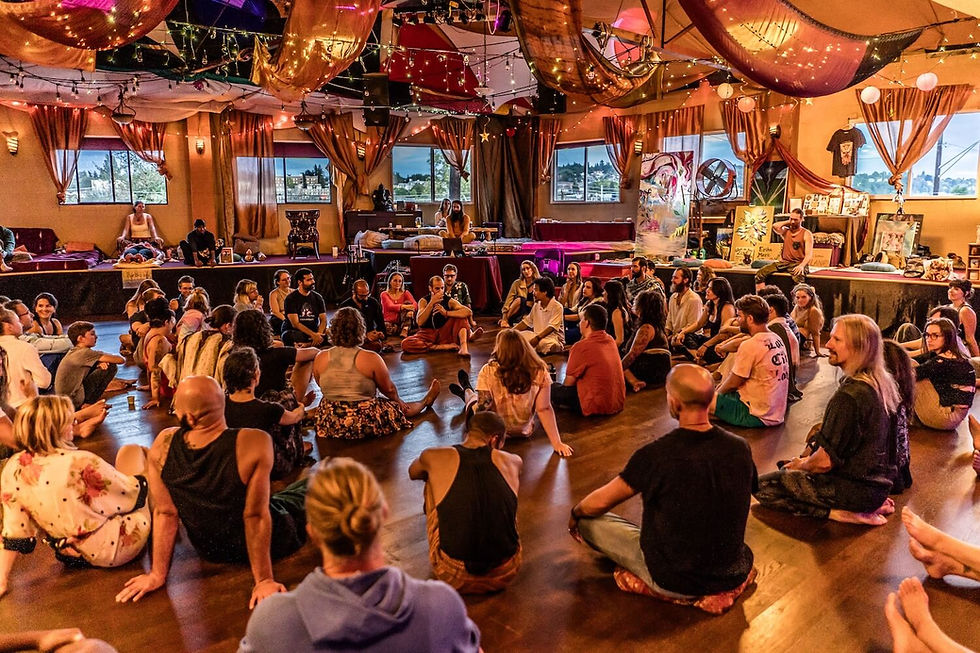
The opening circle is our collective landing. It’s a moment to arrive in our bodies, see one another, and remember that we’re dancing inside a shared agreement of care, consent, and respect. The DJ may offer a brief welcome or share a grounding prompt to help everyone settle in. Then one of the HeartTenders on duty that night will name the consent culture of the space.
Sometimes the circle includes a short verbal invitation, like sharing a word, intention, or breath together, but participation is always optional. You’re welcome to listen quietly, stretch on the side, or simply be present. The opening circle marks the transition from the outside world into the dance floor, reminding us that while everyone’s journey is personal, we’re held within a collective container.
Music and Dance Flow
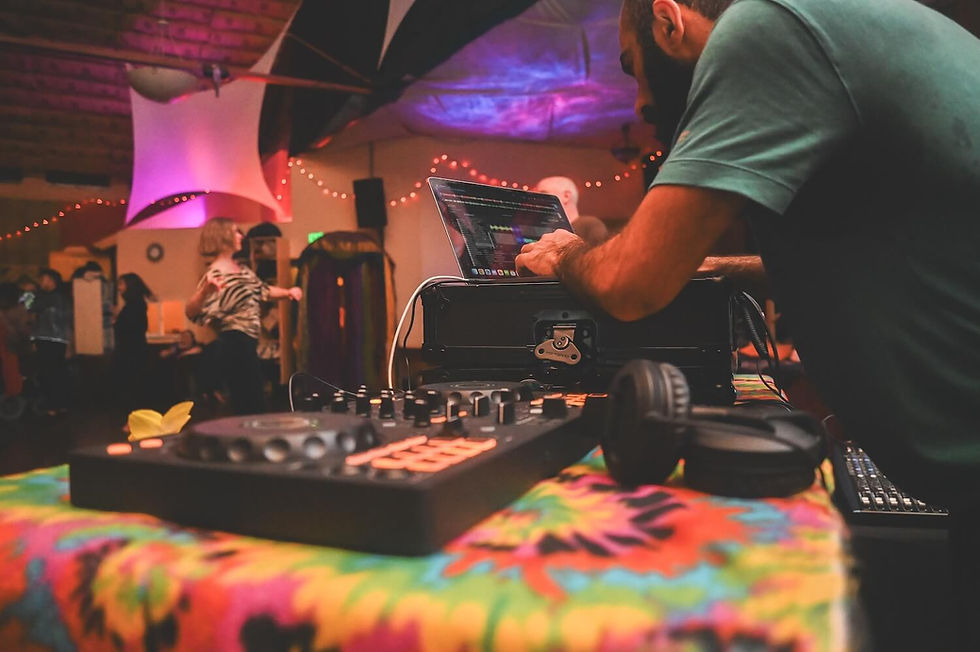
DJs design each dance to feel like a story, unfolding through multiple musical arcs:
Ambient Beginning: Slow, gentle music that eases your body into motion. A time to explore small movements and connect with your internal rhythm.
Building the Grooviness: The energy rises with more rhythmic beats. This is where your body can fully explore movement, improvisation, and connection with others.
Peak Arc: High-energy, ecstatic, and dynamic. Let your body express fully. This is often the most liberating part of the dance.
Integration & Wind-Down: Music softens, allowing reflection and grounding. Movements slow and bodies recover.
Closing & Shared Stillness: The final moments are quiet, reflective, and restorative, giving the community space to integrate the experience.
Musical styles vary from night to night—global rhythms, electronic, acoustic, or thematic journeys—and sometimes DJs take us through multiple arcs in one set, but every song is chosen to support your experience of catharsis.
Movement Options

Ecstatic dance invites you to move in whatever way feels true for you in the moment. Many people dance solo for part or all of the night, exploring their own inner landscape. Others enjoy partnering, mirroring, or engaging in spontaneous small-group movement. All of these are welcome, and you’re free to shift between them at any time.
Connection is optional, never assumed. If you’re interested in dancing with someone, let your body language be an invitation—not a demand. Making eye contact, offering a hand, or pausing to check in nonverbally can open the door. A smile, nod, or stepping closer can mean “yes.” Turning away, stepping back, shaking your head, or placing a hand on your heart are clear and respected ways to say “no” or “not right now.”
Consent is ongoing and can change at any moment. You’re always allowed to step away, take space, or return to solo movement—no explanation needed. The same goes for others. Honoring a “no” (spoken or unspoken) is part of what keeps the dance floor safe, playful, and alive.
Some nights include contact-inspired movement, shared weight, or physical closeness; other moments are entirely internal. Touch is never required, and stillness is just as valid as big, expressive movement. Props, levels (floor work or standing), and creative expression are welcome as long as they respect shared space and consent.
If you ever feel unsure, overwhelmed, or need support, our HeartTenders are present and available. We’re all co-creating a space where freedom and care exist together—so you can dance boldly and safely.
Community & Connection
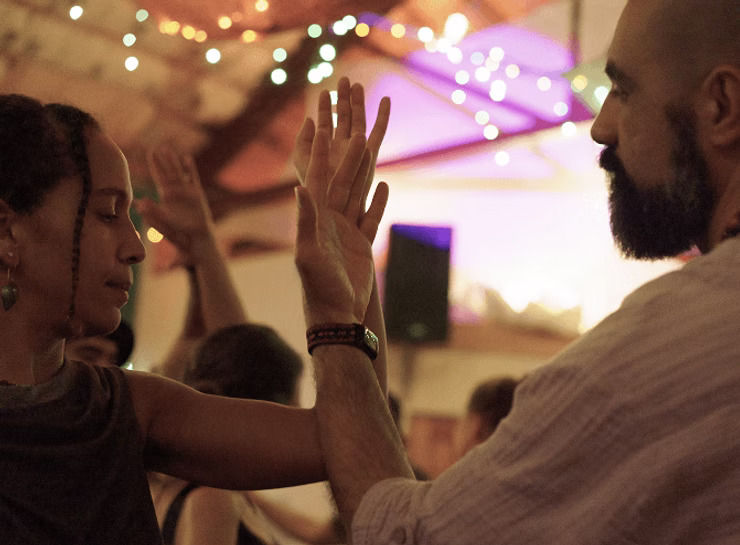
Ecstatic dance is both an individual and a communal experience. While much of the journey happens inside your own body, the shared presence of others creates a powerful field of connection. You may feel moments of resonance, playful interaction, deep witnessing, or quiet coexistence on the floor.
Connection is guided by mutual consent at all times. We encourage awareness of personal and shared space, responsiveness to nonverbal cues, and respect for different styles of engagement—from high-energy interaction to inward, eyes-closed movement. Our HeartTenders are available throughout the dance to support consent, boundaries, and emotional regulation if anything feels unclear or activating.
This culture of care allows the dance floor to become a place where authenticity, vulnerability, and joy can emerge naturally—without pressure to perform, connect, or engage in any particular way.
Closing the Dance
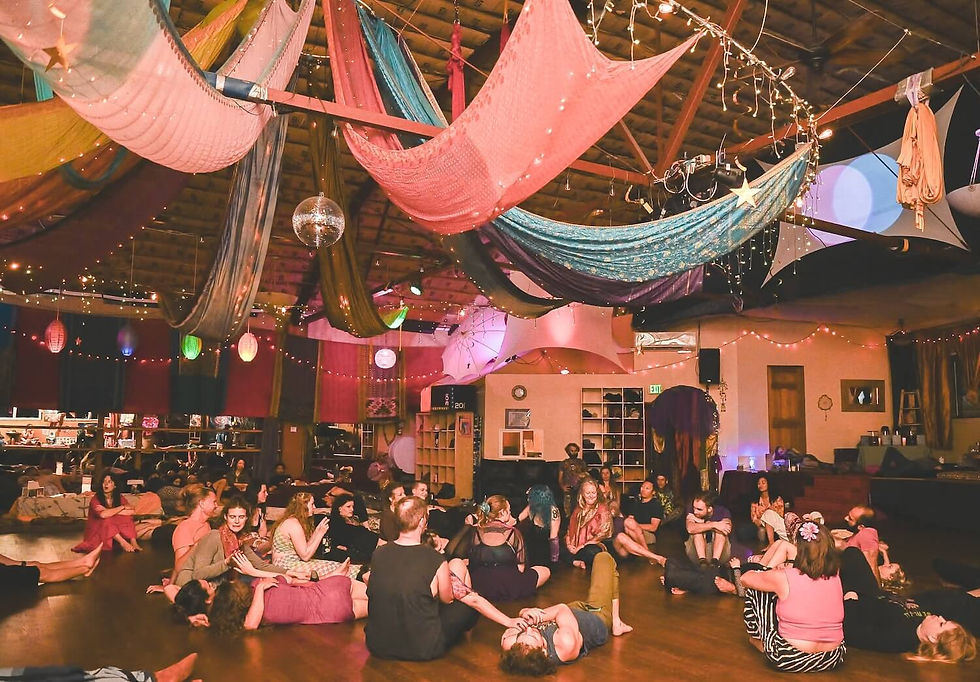
As the music comes to rest, we enter a collective landing. The closing phase includes stillness and a brief closing circle to help integrate the experience and gently bring the nervous system back to baseline. This is a time to feel what’s present: gratitude, tenderness, spaciousness, or rest.
During this time you're welcome to make "heart shares" where you share something you experienced during the dance. Then there will be a couple minutes for community announcements. After that, the space opens into casual social time: chatting, connecting, enjoying snacks, etc.
The closing honors the journey you’ve taken and supports a mindful transition back into the world, carrying whatever insight, energy, or softness you’d like with you.
FAQs About Ecstatic Dance
Do I need dance experience?
Nope! Everyone is welcome, regardless of skill. Move however feels right for you, without steps or rules.
Can I dance alone all night or is that weird?
Nay! Many people happily dance alone all night. We even have yellow bracelets for folks who want to dance solo and not be asked to dance by others.
Can I dance with other people?
In some ecstatic dance communities people rarely dance together. Our Seattle Ecstatica dance community has spent decades combining ecstatic and contact improvisation dance forms into one space.
Throughout the night you'll often see pairs or groups dancing together either with or without touch. If you'd like to ask someone to dance or ask to join a group, you must have mutual agreement from the other(s). If you're new to dancing with others, our recommendation is that you:
Be obvious with your ask. Hovering can make people uncomfortable.
Give people an easy out. Trust is built only when it's easy to say "no."
When in doubt, give them space. Focus more on building trust than achieving your desires.
These guidelines will help you navigate the dance floor and build lasting friendships.
What should I wear?
Comfortable clothing is best! Yoga pants, leggings, or layers you can move freely in. No outside shoes; indoor-only shoes are fine.
Is this a queer-friendly space?
Abso-frikkin-lutely! Seattle Ecstatica is a home for queer folks of all flavors across the LGBTQIA+ community—tender, wild, curious, glittery... Your identity, expression, and magic are all deeply welcome here.
Is this space supportive for neurodivergent folks?
Glad you asked! We believe ecstatic dance is a phenomenal resource for everyone in the wide neurodiverse world, including autistics, ADHD-ers, and any neuroqueer or neurospicy community members. Because of its freeform nature, ecstatic dance welcomes all movement expressions, stimming, emoting, and other therapeutic or self-regulating gestures. As long as you're respecting others' physical space and boundaries, you are welcome to come and be yourself.
Can children participate?
Yes! Dances are family-friendly and welcome people of all ages in a safe, inclusive environment. Children under 12 get in free.
What about accessibility?
We strive to create an inclusive space for all bodies. There is a ramp we can set up in the back to let in folks who need a ramp to enter the space. Let us know in advance if you have specific accessibility needs and we'll do our best to accommodate.
Tips for a Great Experience
Stay hydrated and listen to your body.
Trust your instincts and move at your own pace.
Respect others’ boundaries and consent signals.
Be present, open, and ready to explore.
Resources
Learn more about our Consent & Safety Resources
Check out Upcoming Dances & Calendar
Explore the [History of Ecstatic Dance]